Grinding out that last impossible rep feels like proof you worked hard — but a growing body of research suggests training to failure may not be the growth catalyst lifters assume it is. Here's what the science actually says about failure training, recovery cost, and how to apply it in 2026.
The Failure Fixation
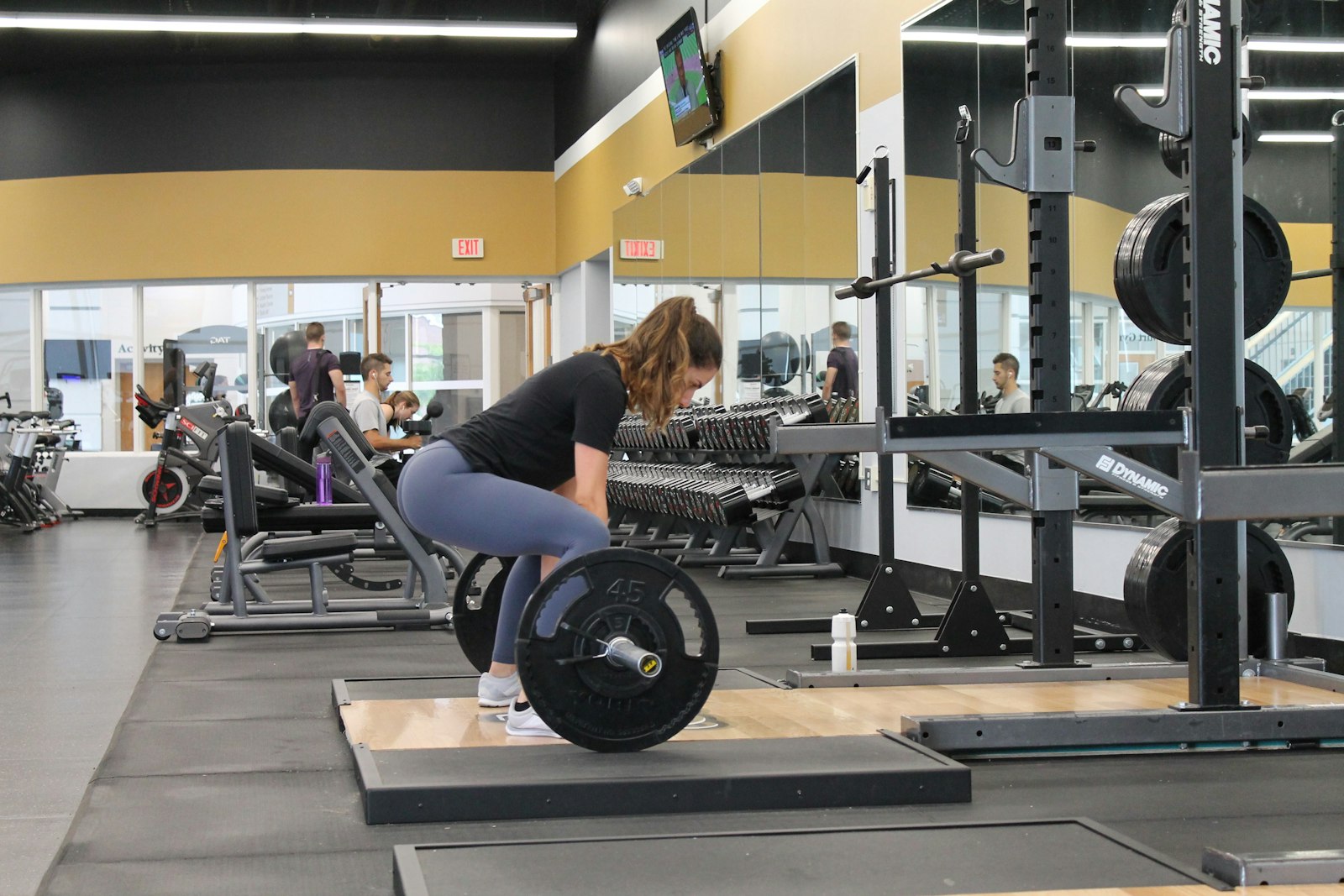
Walk into any serious gym and you'll see it: the final rep of a set, form unraveling, a training partner hovering to grab the bar. Training to failure — the point where you physically cannot complete another repetition with proper form — has become a badge of honor in strength culture. But badge of honor isn't the same as evidence-based protocol.
The research on this question has matured considerably over the past decade, and the answer is more nuanced than either camp — the "always go to failure" crowd or the "never train to failure" purists — wants to admit.
What Does the Research Actually Show?
Multiple meta-analyses comparing failure versus non-failure training for hypertrophy have landed on a similar conclusion: training to failure is not required for muscle growth, and in most comparisons, sets taken close to failure (leaving 1-3 reps in reserve) produce statistically similar size gains to sets taken all the way to failure.
Where the picture gets more interesting is strength. Several studies suggest that non-failure training may actually produce equal or slightly better strength adaptations than training to failure, likely because lifters can accumulate more total volume and recover faster between sessions when they're not grinding out maximal sets every time.
The mechanistic explanation ties back to motor unit recruitment. Training to failure does maximize the recruitment of high-threshold motor units in that specific set, but research on effort-based training shows you can achieve similar recruitment patterns at 1-2 reps shy of failure, especially as fatigue accumulates within a set.

The Recovery Cost Nobody Talks About
Here's the part that gets lost in highlight-reel training videos: failure training is expensive. Studies measuring neuromuscular fatigue, soreness markers, and subsequent performance have found that sets to failure produce disproportionately higher fatigue relative to the additional stimulus gained, particularly on compound barbell lifts like squats and deadlifts.
This matters because hypertrophy and strength are built across weeks and months, not single sessions. If a failure set on Monday means your Wednesday session suffers because you're still fatigued, you've potentially traded a small acute benefit for a larger weekly volume deficit. For natural lifters without pharmacological recovery support, this trade-off tends to favor training with reps in reserve.
Support Recovery Between Hard Sessions
Whether you train near failure or to true failure, recovery nutrition matters more. Explore electrolytes, magnesium, and protein formulas built for serious training schedules.
Shop Recovery at iHerb →Does It Depend on the Exercise?
Yes — and this is one of the more practically useful findings in the literature. Isolation exercises (leg extensions, curls, lateral raises) appear far more forgiving of failure training than multi-joint compound lifts. Because isolation movements involve less technical complexity and lower systemic fatigue cost, pushing them closer to or at failure carries less downside risk.
Compound lifts like squats, deadlifts, and heavy presses are a different story. Technical breakdown under fatigue increases injury risk, and the systemic fatigue cost is much higher relative to the local muscle stimulus gained. Most evidence-informed coaches now recommend reserving true failure training for isolation work and keeping compound lifts in the 1-3 reps-in-reserve range.
| Training Approach | Hypertrophy Outcome | Strength Outcome | Fatigue Cost | Best Use Case |
|---|---|---|---|---|
| True failure (0 RIR) | Equal to RIR training | Often lower than RIR training | High | Isolation exercises, final set of session |
| 1-2 RIR | Equal to failure training | Equal or better | Moderate | Most working sets, compound lifts |
| 3-4 RIR | Slightly lower per set | Good with higher volume | Low | Warm-ups, high-frequency programs |
| Failure every set | No added benefit shown | Often impaired | Very High | Not generally recommended |
Who Might Actually Benefit From Failure Training?
Context matters. Advanced lifters with years of training experience often have a harder time generating sufficient intensity without pushing closer to failure, since their nervous systems are efficient and well-adapted. For this population, occasional failure sets — used strategically rather than every set, every session — can serve as a useful intensity technique.
Beginners and intermediates, meanwhile, typically have more room to grow simply by adding volume and consistency. For this group, chasing failure often introduces more fatigue and injury risk than the modest stimulus benefit justifies.
- Advanced lifters: occasional failure sets on isolation work can help push past plateaus
- Intermediate lifters: reps in reserve training with progressive overload is usually more productive
- Beginners: focus on technique and consistent volume; failure training offers little extra benefit
- Anyone returning from injury: avoid failure training on compound lifts until technical mastery is restored
Track Reps in Reserve With Precision
A reliable lifting log or fitness tracker helps you objectively monitor proximity to failure across sessions instead of guessing.
Browse Fitness Trackers →Practical Guidelines for 2026 Training Programs
Based on the current body of evidence, a sensible approach looks less like a strict rule and more like a hierarchy of priorities. Total weekly volume, progressive overload, and consistency matter more than whether any single set reaches absolute failure.
A workable framework: keep most compound lift sets at 1-3 reps in reserve, reserve true failure for the last set of isolation exercises, and periodically test true failure on a main lift only when assessing strength or testing a new program block — not as a weekly habit.
- Prioritize consistent weekly volume over single-set intensity
- Keep heavy compound lifts (squat, deadlift, bench) at 1-3 RIR most weeks
- Save true failure for isolation movements at the end of a session
- Use failure training sparingly — a tool, not a daily default
- Track reps in reserve honestly; most lifters underestimate how close to failure they are
Fuel High-Effort Training Blocks
Creatine monohydrate remains one of the most researched supplements for supporting strength and training volume across intense training phases.
Shop Creatine Monohydrate →The Bottom Line
Training to failure isn't a myth, but it isn't the secret ingredient many lifters believe it to be either. The science points toward a more sustainable truth: effort matters, consistency matters, and total volume accumulated over weeks matters more than whether you squeeze out that last impossible rep.
Use failure strategically — on isolation work, occasionally, with intention — and build the rest of your training around hard, honest effort well short of it. That's the approach the evidence actually supports, not the one that looks best on camera.
From across the network
More from the network on related topics: VitaminSupplyCenter · TestBoostLab · EliteRecoveryLab.